
You belong here
Therapy for BIPOC, LGBTQIA+, immigrants, and 1st & 2nd Folx
You've learned to code-switch everywhere. Here, you don't have to.
For BIPOC, LGBTQIA+, immigrant, and first and second generation individuals, seeking help can carry its own particular weight — the worry of being misread, the labor of context-setting, the sense that the framework being offered just doesn’t quite fit.
Maybe you’re moving between worlds — at home, at work, with family, with friends — and never quite feeling whole in any of them. Too assimilated for your family, too foreign for everyone else. Too ethnic at work, too queer for your family, too something for every room you walk into. Maybe the therapy you’ve tried before felt too Western, too narrow, or too quick to pathologize what’s actually survival.
That experience of living between worlds isn’t a symptom to be fixed. But it is worth sitting with — all of it. You don’t have to leave any part of yourself at the door here. All of it is welcome — including the parts that are still figuring themselves out.
Healing is not forgetting your people or your story—it’s making space for you inside it.
This space is built for the complexity you live in every day.

BIPOC individuals
Navigating the world in a body that has been stereotyped, politicized, or made invisible — often all at once. Carrying the weight of your family’s history and your community’s pain alongside your own. Learning to trust spaces that weren’t built with you in mind, and figuring out what healing even looks like when the wound isn’t only personal.
LGBTQIA+ people
Holding a queer identity in a world that still asks you to justify it — to your family, your culture, your faith community, sometimes to yourself. The grief of not being fully seen by the people who matter most. The exhaustion of performing straightness, or normalcy, or okayness. And somewhere underneath all of that, the quiet work of learning to take up space without apology.
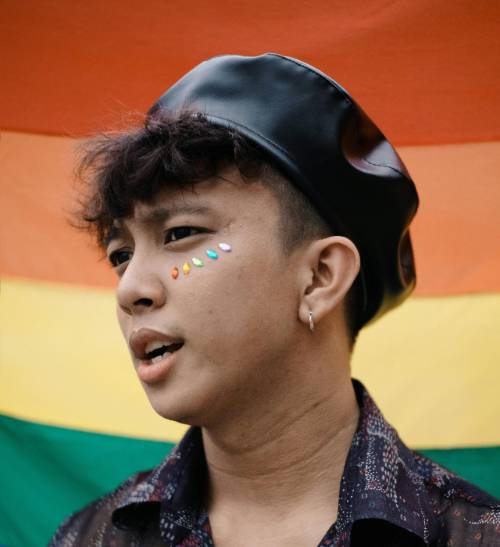
Immigrants
Processing what it means to build a life far from where you’re from — the grief for what was left behind, the pressure to make it worth it, and the disorientation of navigating a culture that has its own unwritten rules, references, and rhythms nobody handed you a guide for. And underneath all of it, the question of where you truly belong.
1st & 2nd Gen
You grew up translating… language, yes, but also values, expectations, ways of being. You inherited stories you were never fully told, wounds that were never named, and patterns that passed down through the family without anyone meaning to pass them. You learned to carry your family’s sacrifices as your own responsibility. Maybe you became the success story, or the one who holds it all together, or the one who drifted and still feels guilty about it. Figuring out who you are outside of what you owe: what you actually want, what you actually feel, what belongs to you and what you’ve just been holding for everyone else is its own kind of work.
As Featured In


Therapy for Your Full Self
Therapy, as it’s traditionally practiced, was built on Western European ideas about the self — that you are a bounded, separate individual, that your struggles are yours alone to resolve, and that the goal is to function better within the existing world. For many people whose lives have been shaped by colonialism, migration, racism, and systemic exclusion, that framework doesn’t just feel limited. It can feel like another form of erasure.
Decolonizing therapy means questioning which assumptions I bring into the room — about what health looks like, what healing is supposed to feel like, what counts as progress. It means recognizing that many of the things that get labeled as symptoms — hypervigilance, people-pleasing, emotional suppression, distrust of authority — are often adaptations. Intelligent, necessary responses to environments that required them. The work isn’t to pathologize those responses. It’s to understand what they protected you from, and to slowly build the conditions where you need them a little less.
Your struggles don’t begin and end with you. They’re woven into family systems, intergenerational histories, and structures that were never designed with your flourishing in mind. Your healing doesn’t have to happen in isolation from the truth of your life — we can hold both the very real constraints of the world you’re navigating, and the very real possibility of something different.

I bring this not only as a clinician but as someone who has lived at these intersections. I’m first generation — my mother is from Vietnam, my father is from China, both carrying histories of displacement, starvation, and survival that shaped everything about how I was raised and who I became. I know something about moving between worlds, about carrying what your family survived, about finding yourself in frameworks that weren’t built for you. That lived knowledge informs how I show up in the room.
And I want to be honest with you: I will still get things wrong. I can only ever fully know this work from inside my own cultural lens, and I hold blind spots I’m not always aware of. I carry my own internalized biases — the isms, the colonialism, the assumptions absorbed from systems I’ve moved through my whole life — and I’m not always aware of where they show up. This is ongoing work for me, not a box I’ve checked.
What I can offer is a genuine commitment to staying curious, to being corrected, and to not making you responsible for my learning. The relationship itself is part of the healing — and that means it has to be real.
Schedule a free 15 minute consult here
Prioritize your mental health and self-care from the comfort of your home.
Schedule a consult here. We’ll chat about any questions you might have, and it’ll be an opportunity for me to learn more about you and what you’re going through.
Testimonials
Frequently Asked Questions
about Identity-Affirming Therapy
What does “culturally responsive” or “identity‑affirming” therapy actually mean?
It means we name racism, colorism, xenophobia, homophobia, transphobia, misogyny, classism, and other systems that impact your mental health—instead of pretending everything is just about “coping skills.” It also means I’m attentive to cultural context, community, spirituality, and family obligations as potential sources of both pressure and strength.
Will I have to educate you about my culture or identities?
Some amount of sharing is part of any relationship, but you should not feel like a walking textbook. My job is to be actively learning, asking thoughtful questions, and doing my own work around anti‑racism, decolonizing practice, and LGBTQIA+ issues—not relying on you to train me.
I’m first/second gen and feel pulled between cultures. Is that something we can talk about?
Absolutely. Many first and second generation clients describe feeling “in between” cultures, languages, expectations, and versions of themselves. Therapy can be a space to explore migration stories, family roles, achievement pressure, guilt, intergenerational trauma, and what belonging looks like for you now.
How do you approach therapy with LGBTQIA+ clients?
I work from an affirmative stance, which means your gender identity, sexuality, and relationship structures are respected and not treated as a problem to fix. We can look at minority stress, family responses, internalized stigma, safety, and joy, while holding the rest of your life—not just your queerness or transness.
What if my family or community doesn’t believe in therapy?
That’s very common for BIPOC, immigrant, and first‑gen clients. We can talk about stigma, secrecy, loyalty, and what it’s like to seek help when it wasn’t modeled for you. Therapy doesn’t have to be in opposition to your culture; we can hold respect for where you come from while still making space for what you need now.
Do you work with clients who hold multiple marginalized identities?
Yes. Many of my clients are navigating intersections—BIPOC and queer/trans, immigrant and disabled, first‑gen and caregivers, etc. We won’t pull your identities apart or treat them one at a time; we’ll look at how they interact in real life situations, relationships, and systems.
Culturally responsive and identity‑affirming therapy means I’m not treating these parts of you as “background info,” but as central to understanding your stress, relationships, and resilience.
How long will therapy last?
Therapy can last any time between a year to many more, as long as you are still progressing from our work. The length of therapy depends on what you want and need, and what you want/need can be fluid and dynamic.
Healing and personal growth is not strict or predictable. You can start off by wanting to address something very specific (e.g. “I want to feel less anxious”), but through our work together could realize a deeper meaning to these anxious symptoms (e.g. “I feel anxious because I am terrified of intimacy” to “I’ve had very familiar experiences of being emotionally suffocated when I was close to people”). Realizing these deeper long-standing issues may then shape the focus and length of treatment.
Regardless of why you are seeking therapy and how long you hope to be in treatment, it is important to remember that your thoughts and input are invaluable to me, and the pace and length of treatment will always be a collaborative discussion.
How often are therapy sessions?
Meeting consistently and stably on a weekly basis will help build safety and trust, which is essential for the work to progress on a deeper level. Biweekly sessions impact the effectiveness of therapy.
Often, meeting less frequently results in a ‘catch up’ type of session and does not allow for the time, space, and emotional capacity needed to address what goes on beneath the surface.
Depending on the level of our work, there are also times when meeting two or more times a week is appropriate, and that will always come from us talking and making that decision together.
Are therapy sessions covered by my insurance?
If you have out-of-network benefits, your insurance may be able to reimburse you for approximately 50%-80% of each session after the out-of-network deductible is met.
Out-of-network psychotherapy coverage varies by carrier and policy. It can be confusing, but we’re here to help! If you aren’t sure whether or not you have out-of-network benefits, we can check for you. Just email your insurance card and date of birth to info@imagineemotionalwellness.com
How do I get started?
Here are 3 simple steps.